What makes this studio different
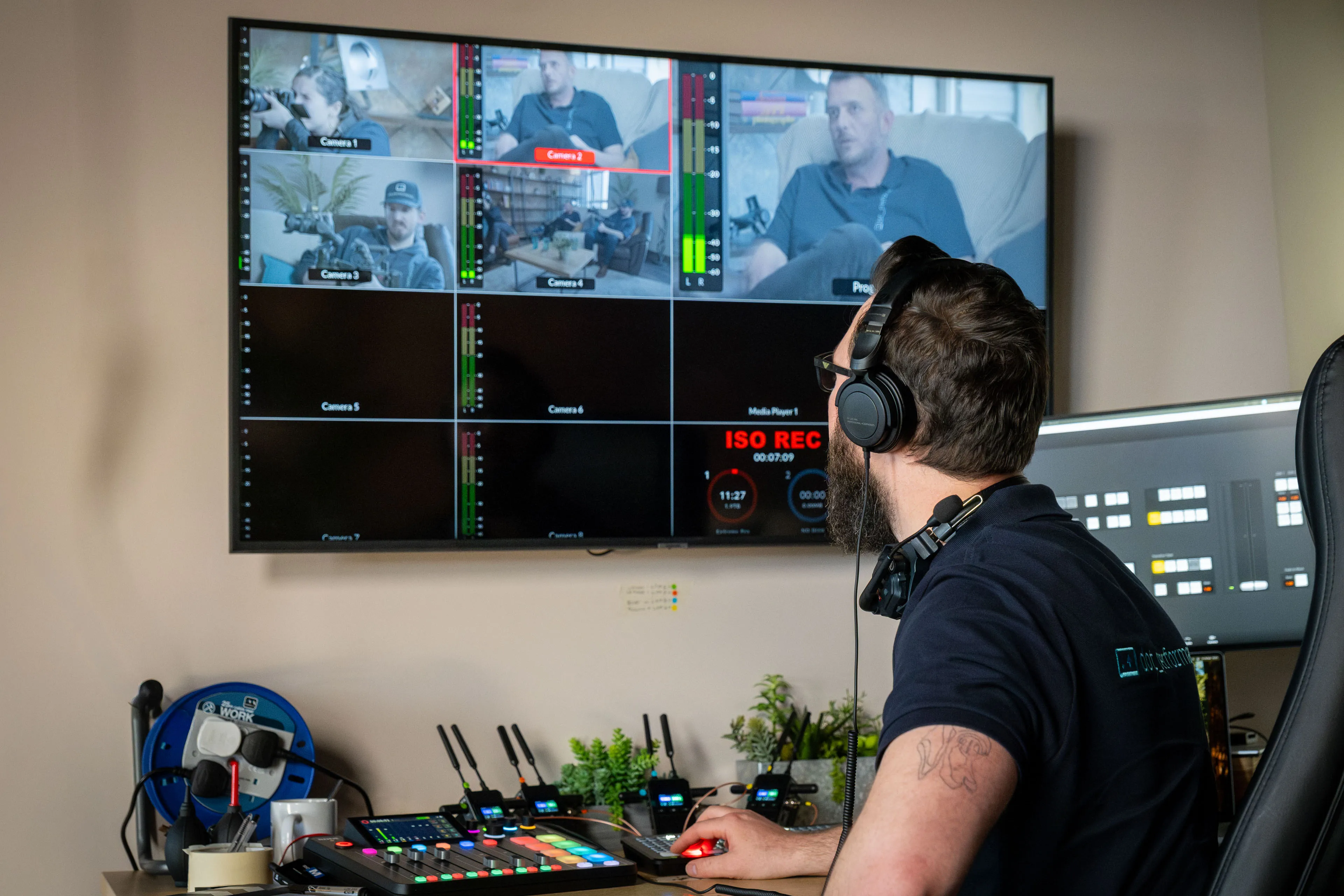
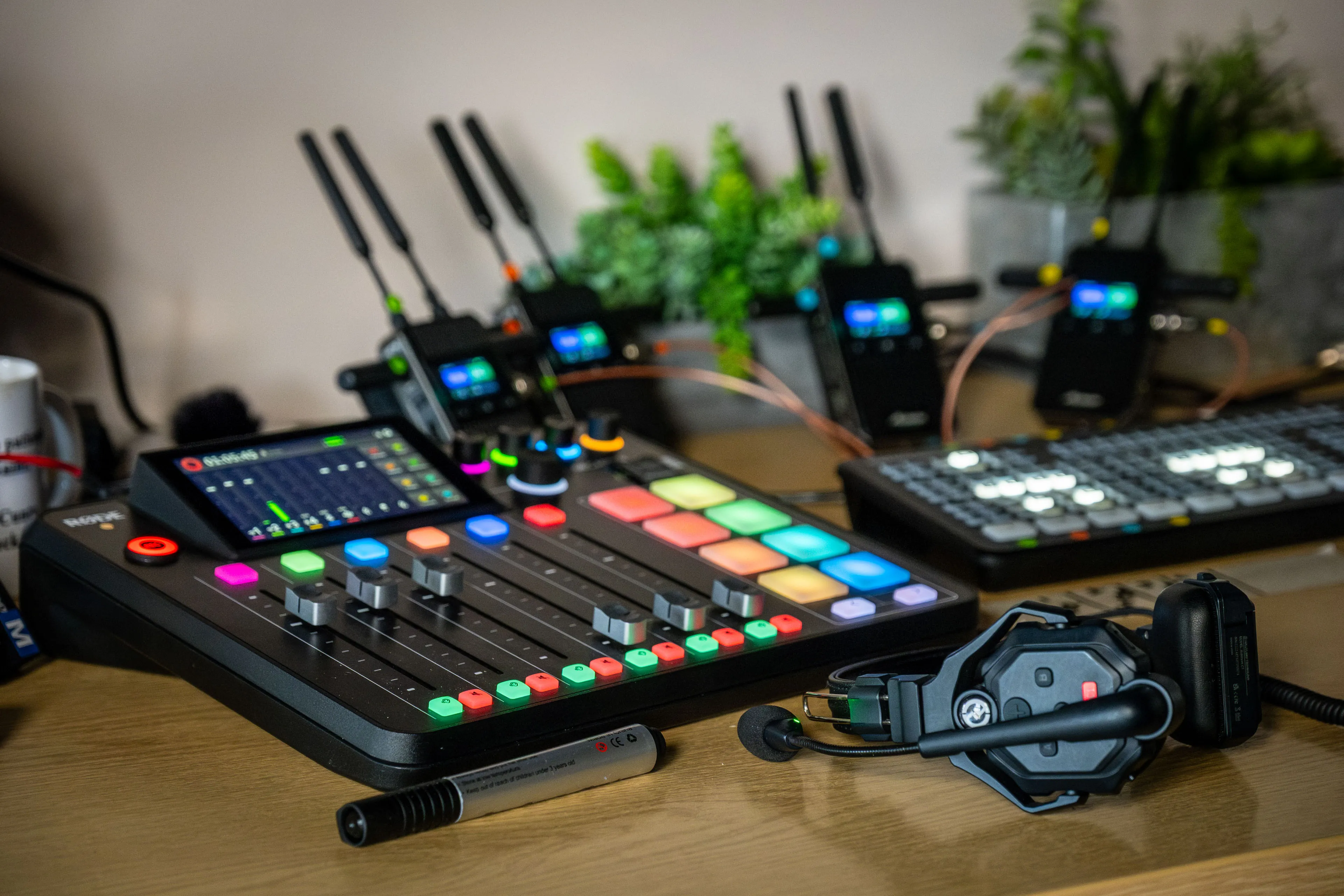
Our podcast and interview studio runs up to eight cameras through a Blackmagic ATEM Mini Extreme ISO, all feeding back to a control centre where every angle is visible live on screen.
The director sees everything as it happens and can switch in real time. That changes the nature of the production immediately.
Instead of recording a few static angles and hoping the edit can create energy later, the rhythm starts in the room. Reactions can be followed as they happen. Cutaways are already there. The conversation can be directed live rather than reconstructed afterwards.
The result feels much closer to broadcast than to a typical podcast recording.
Why the cameras matter
The biggest difference is the cameras themselves.
Most podcast studios rely on mirrorless stills cameras or PTZ units. They do the job, but they tend to produce an image that feels functional rather than intentional.
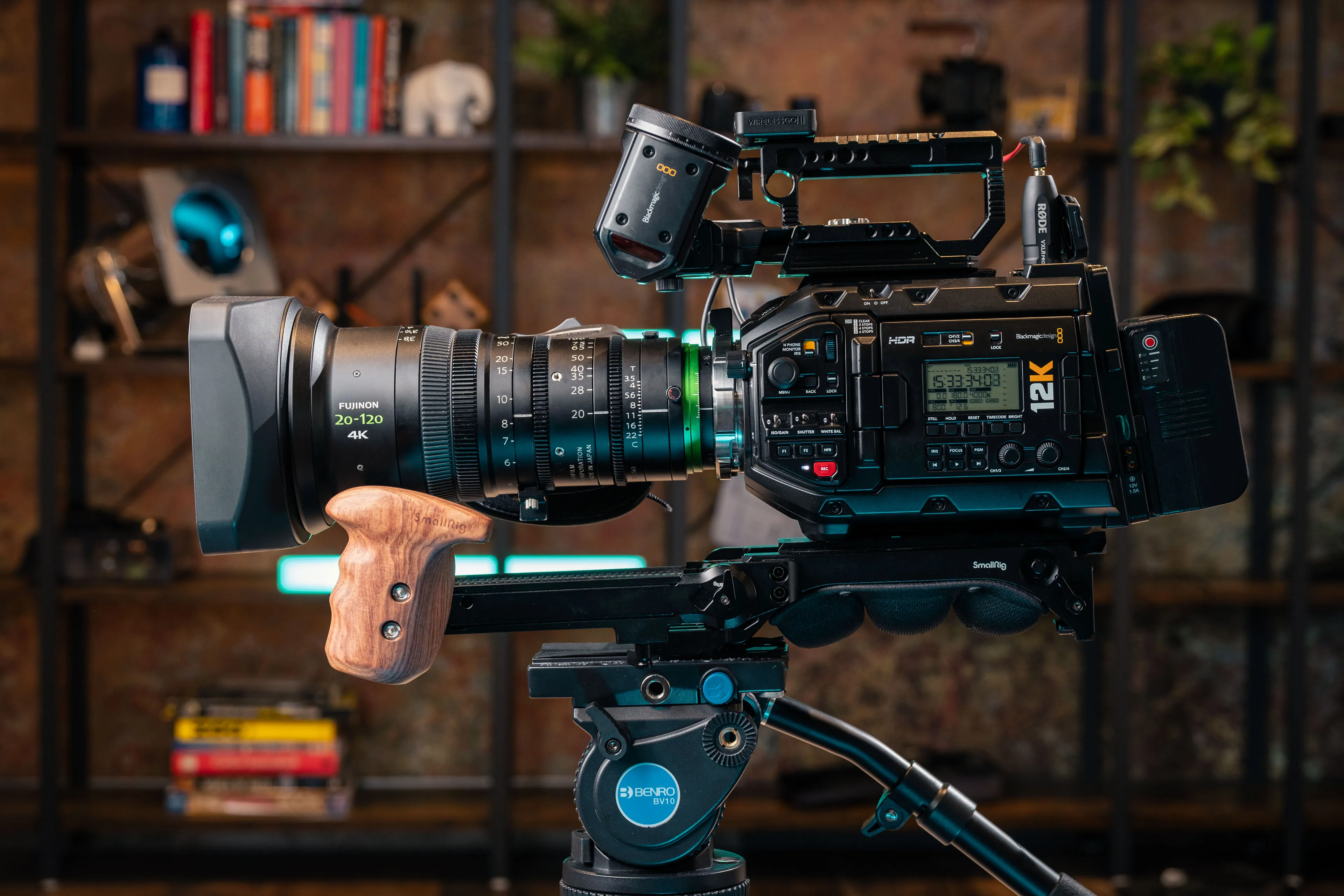
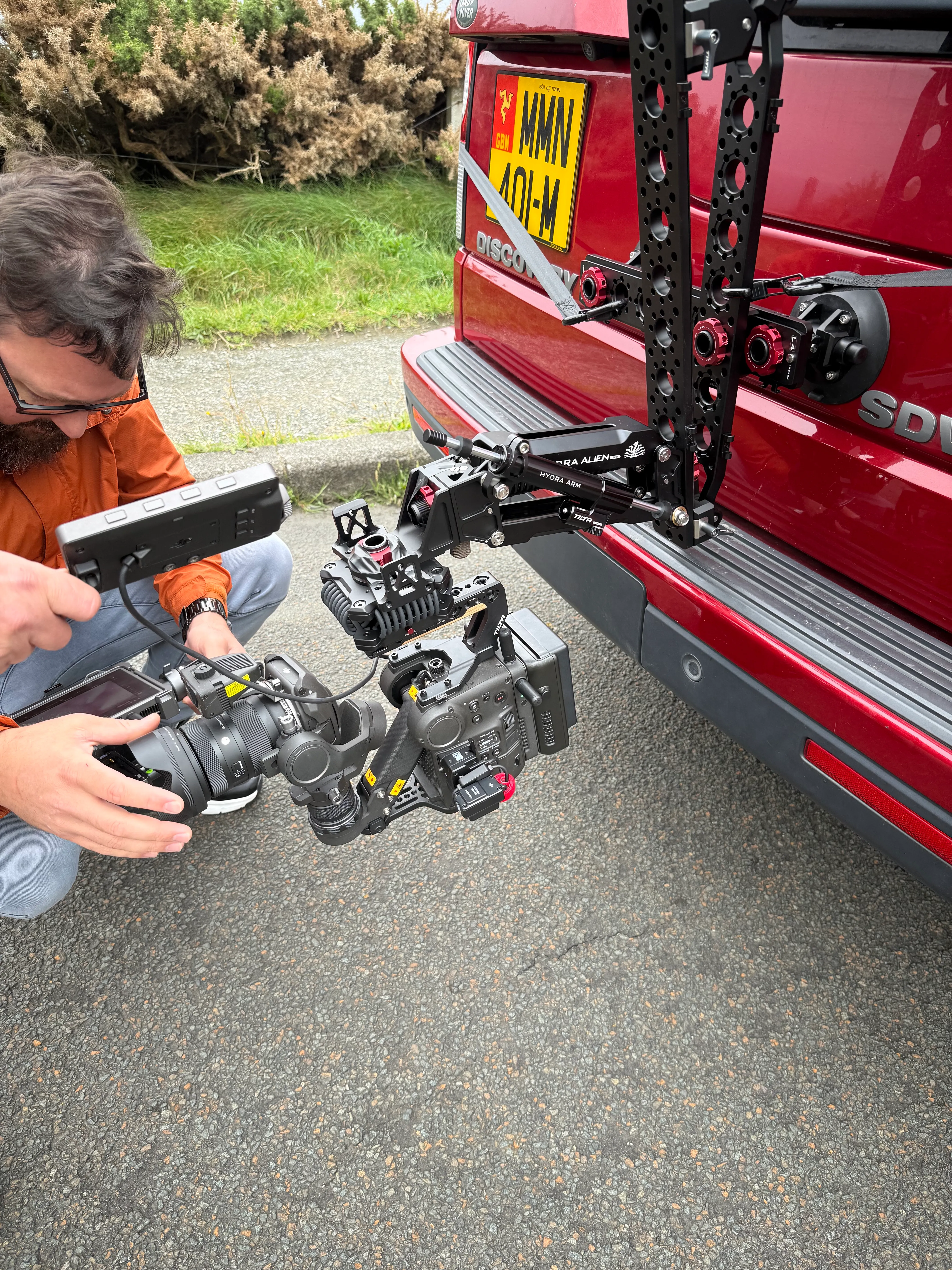
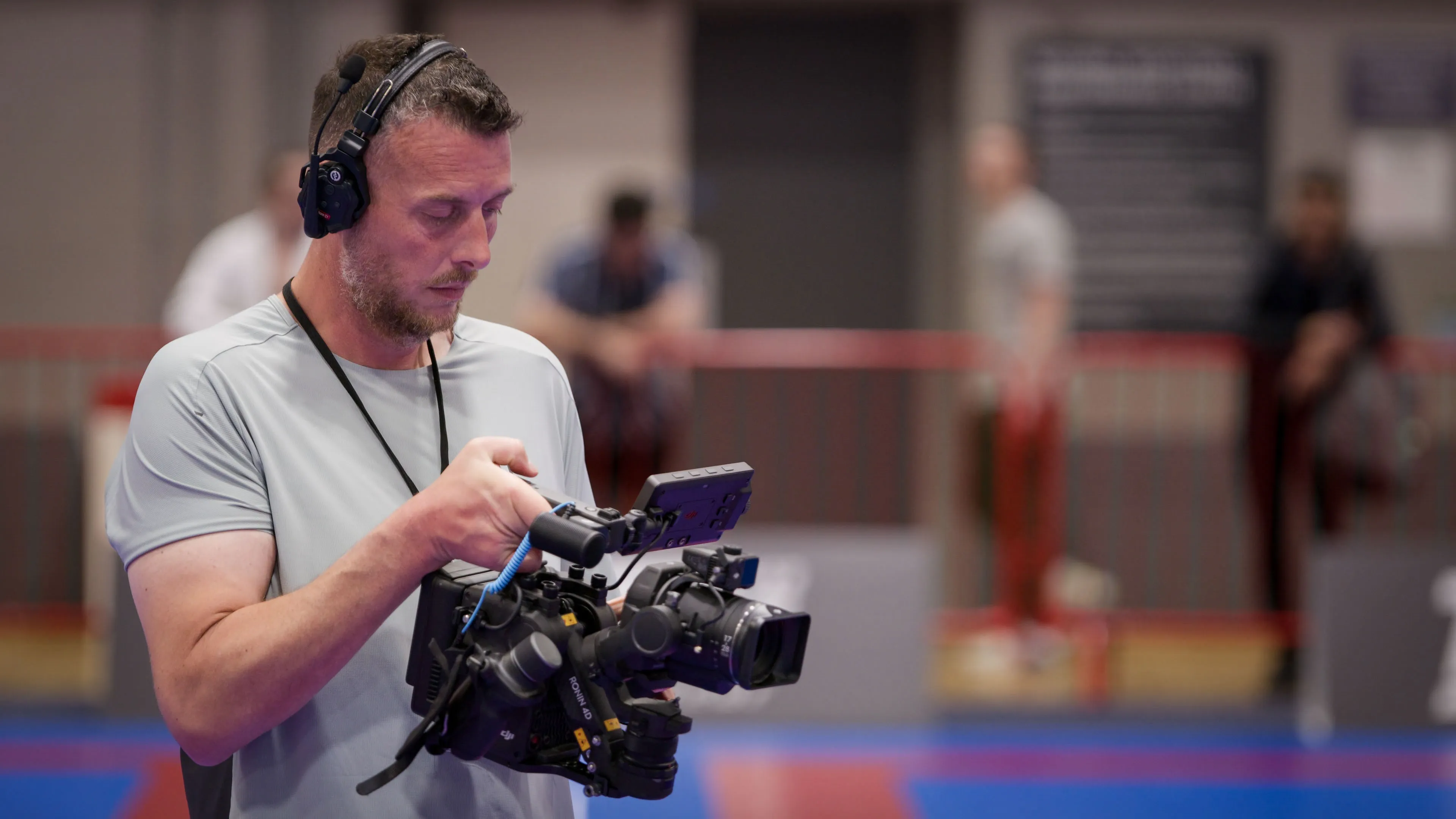
We use the same Blackmagic URSA Mini Pro 12K OLPF and Pocket Cinema Camera 6K Pro cameras that we use on commercial shoots.
That means the image quality is not just good for a podcast. It is cinema-grade.
You get proper colour science, controlled depth of field, and an image that holds up properly across large screens, social cutdowns, campaign edits and branded content. The footage feels considered from the start rather than upgraded later.
What the ATEM is doing in the background
The ATEM Mini Extreme ISO is one of the most useful parts of the whole setup, because it is doing much more than switching live feeds.
It records every camera input as an individual file, captures the live programme cut, and automatically creates a DaVinci Resolve project at the same time.
That means the moment the recording ends, the first edit already exists.
The live cut made by the director becomes the first draft. Instead of starting from scratch in post, the production comes out of the room with structure already built in.
Why that changes the turnaround
That alone saves hours.
But the real value is what it does to the overall content process. The recorded files can act as proxies, so the edit can move immediately. Then, when the structure is approved, the original camera files can be brought back in for full-resolution finishing and grading.
In practical terms, that means an interview can be recorded, switched, organised and ready for final polish in the time it normally takes most teams just to begin the edit.
That matters more than most people realise.
Speed is what breaks most content programmes. Organisations want to produce regular interviews, conversations and thought-leadership pieces, but the distance between recording and publishing is usually what kills consistency.
When the edit exists before the guest has left the building, that excuse starts to disappear.
Why eight cameras changes the feel of the conversation
The value of eight cameras is not just coverage. It is flexibility.
A director is not limited to a basic shot-reverse-shot structure. They can follow the conversation properly. A reaction is there when it matters. A wider framing is available when the moment needs space. A tighter angle can bring focus back without forcing it in post.
That gives the final piece more rhythm.
The edit feels alive because the options were present in the room, not manufactured later to compensate for a flat setup.
That is the difference between content that simply records a conversation and content that actually carries it.
Why we built it this way
We kept seeing the same problem.
The conversation would be strong. The guest would be good. The ideas would be worth hearing. But the production would flatten all of it.
The content deserved better than that.
So we built a setup that treats interviews and podcasts with the same seriousness we bring to other productions. Better cameras. Proper live direction. Faster post-production. A finished result that feels deliberate rather than improvised.
Now the production matches the quality of the conversation.
How we use it
We use this setup for podcast series, founder interviews, executive conversations, thought-leadership content, internal communications, campaign support content and branded interview formats.
It works particularly well when the material needs to do more than live as a single long-form episode. Because the production quality is high and the edit structure is already in place, the same recording can be turned into hero content, social cutdowns, campaign clips and reusable brand assets without starting from zero.
That makes it a studio setup built not just for recording, but for output.
Final thought
Most podcast studios are designed to capture a conversation.
This one is designed to produce one.
That is the difference.
Planning an interview series or podcast format?
If you are planning a podcast, interview series or thought-leadership format and want the production to feel more like a film set than a webcam recording, get in touch.