Why 12K matters
You shoot at 12K. You deliver at 4K. In theory, that sounds excessive. In practice, it changes the character of the final image.
Downsampled 12K does not just look like sharper 4K. It looks denser, calmer, more resolved. There is a depth to it that is hard to explain until you put it next to footage from something else. Skin looks more natural. Detail holds without turning brittle. The image feels less digital in the worst sense of the word.
That is the appeal. Not headline resolution. Usable image quality.
Why the OLPF version is the one to buy
The OLPF version is important.
The optical low-pass filter takes just enough edge off the sensor's resolving power to reduce moiré and aliasing without taking the life out of the image. That matters far more in real-world production than it does in spec-sheet comparisons.
If you are shooting fabrics, architecture, products, environments, or anything else that exists outside a controlled test setup, this is the version you want. It feels less clinical. More dependable. Better behaved.
A workflow that makes sense
One of the reasons this camera works so well for us is that it fits the rest of the workflow properly.
It shoots Blackmagic RAW natively and drops straight into DaVinci Resolve, which is where we are grading and finishing anyway. There is no awkward handoff. No unnecessary transcoding step. No sense that the camera and the post pipeline belong to different worlds.
You go from card to timeline to colour to delivery inside one ecosystem, and somehow the files remain more manageable than 12K footage has any right to be.
That matters on real jobs. It keeps the process moving.
Frame rates without compromise
The frame rates are part of the appeal too.
The URSA Mini Pro 12K OLPF will shoot up to 60 fps in 12K 17:9 full sensor, up to 120 fps in 8K DCI full sensor, and up to 120 fps in 4K DCI full sensor. Move to 12K 2.4:1 and it reaches 75 fps. In 8K 2.4:1 and 4K 2.4:1 it goes up to 160 fps. In Super 16 modes, it reaches 120 fps in 6K and up to 240 fps in 4K.
So if the final delivery is 4K, your slow-motion options are generous to the point of being slightly ridiculous. And crucially, you are not trading away the integrity of the image to get them.
A camera that adapts to the job
It is versatile physically as well, which is easy to overlook until you are using it across different kinds of production.
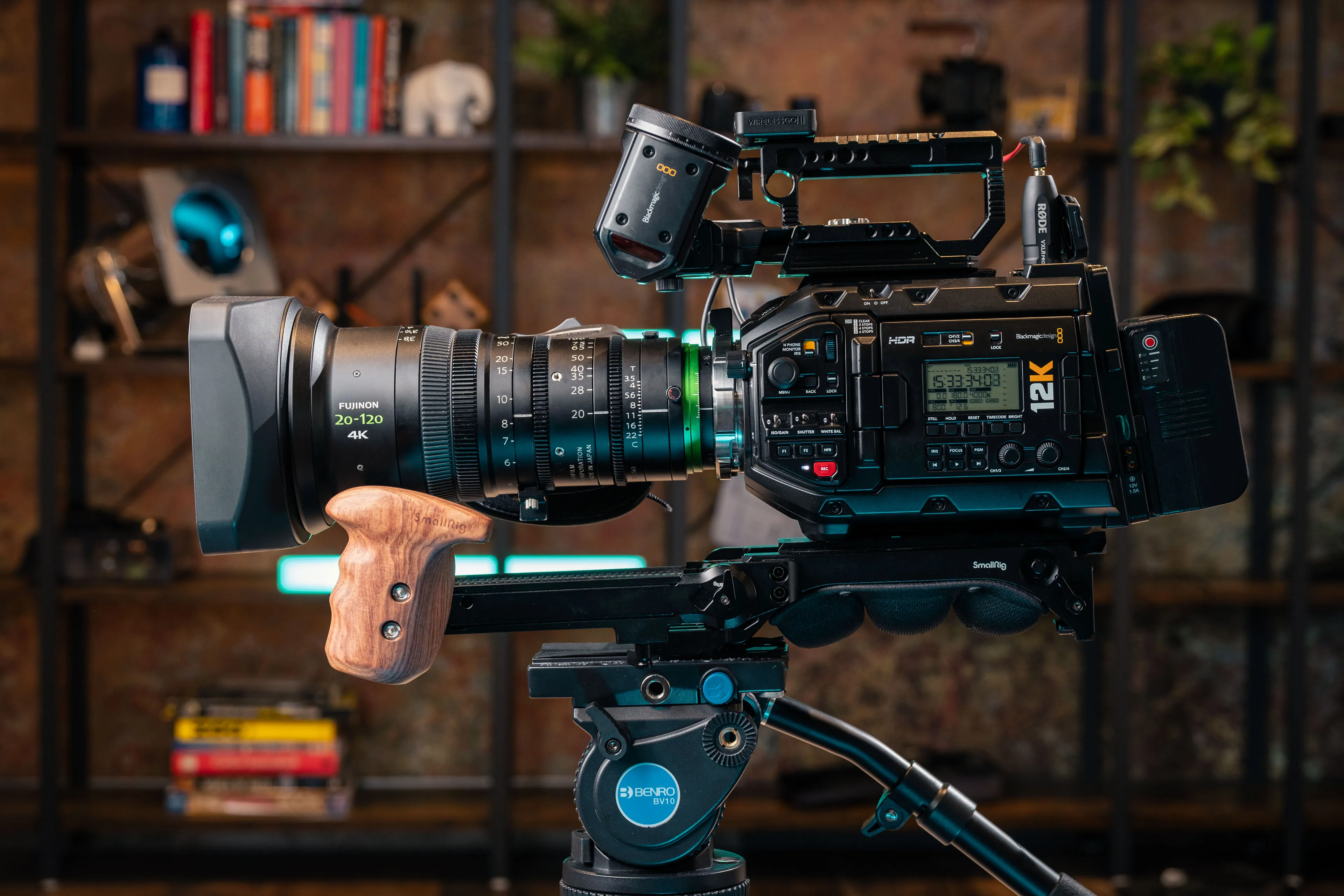
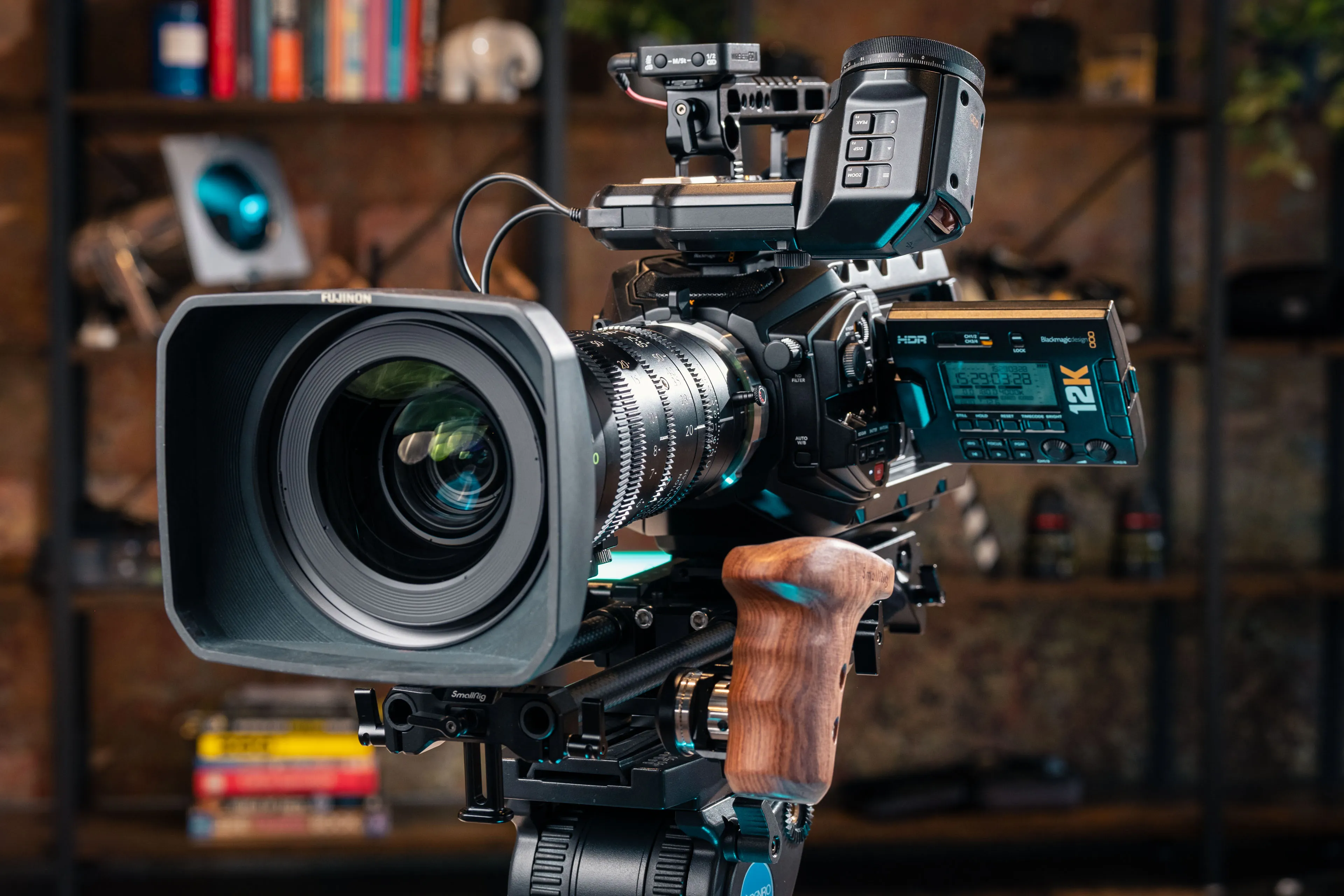
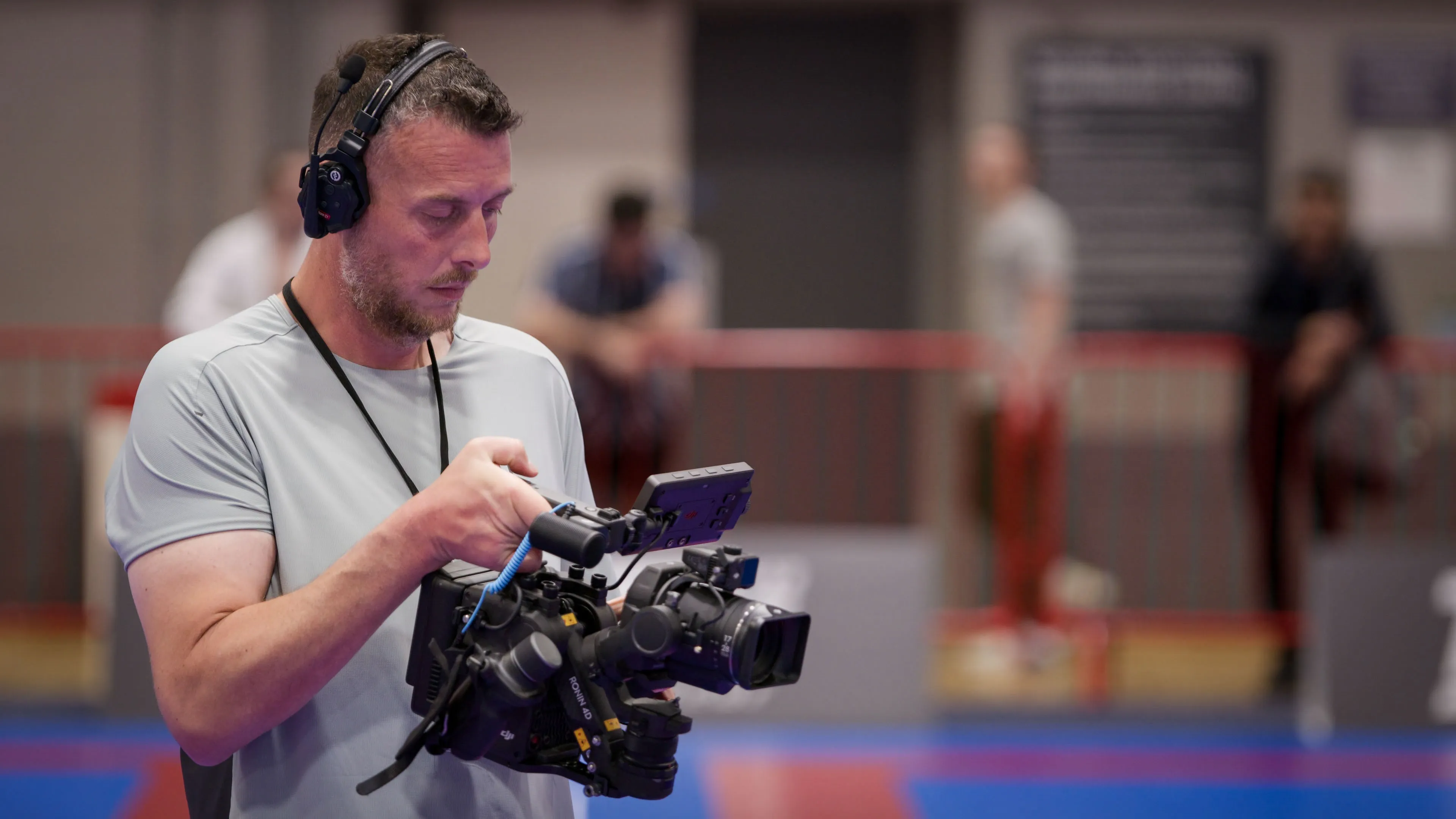
You can put it straight on a tripod for controlled studio or interview work. You can shoulder-mount it when the job needs a more documentary feel. Or you can strip it back and work faster in looser setups, including using a saddlebag when that makes more sense than building out a full support system.
That range matters. It means the same camera can move comfortably between brand film, documentary, campaign content, and more practical location work without constantly feeling over- or under-configured.
The value is hard to ignore.
Then there is the price.
This camera costs less than some lenses. Blackmagic could have charged significantly more for what this is, and it still would have made sense against RED, ARRI, or Sony alternatives in the same broader conversation.
That is what makes it difficult to argue against. Not because it beats every camera at everything, but because the ratio between cost and output is unusually strong.
What it is actually like to use
We have used it across commercial work, brand films, and documentary projects, and it handles all of them well.
Low light is respectable without pretending to be miraculous. Dynamic range gives you enough room in post to recover highlights and shadows without the image collapsing. The files hold together. The colour responds properly. It gives you room to make decisions later without punishing you for them.
It is not an ARRI Alexa, and that is fine. It is not trying to be. It is trying to be a genuinely serious cinema camera that people can actually afford to own, use regularly, and build a workflow around.
That is a more useful proposition than most people want to admit.
The honest take
This camera improved our video work almost immediately.
Not because it is the most expensive thing in the room. Not because clients care about the badge on the side. But because it gives you so much to work with in post that even a well-lit, well-composed, otherwise straightforward shoot comes back with more depth, more flexibility, and more finish.
That changes the standard of the final output.
Why this matters for brand and campaign work
For brands, the real advantage is not technical bragging rights. It is creative flexibility.
Most campaigns now have to work across multiple formats at once: widescreen film, social cutdowns, digital placements, website assets, launch content, paid media, and whatever comes next after that. Cameras like the URSA Mini Pro 12K OLPF make that easier.
You can:
- crop multiple formats from a single shot
- stabilise or reframe footage without losing quality
- preserve more options in post
- create assets with a longer usable life across channels
That does not just improve image quality. It improves the economics of the shoot.
How we use it in production
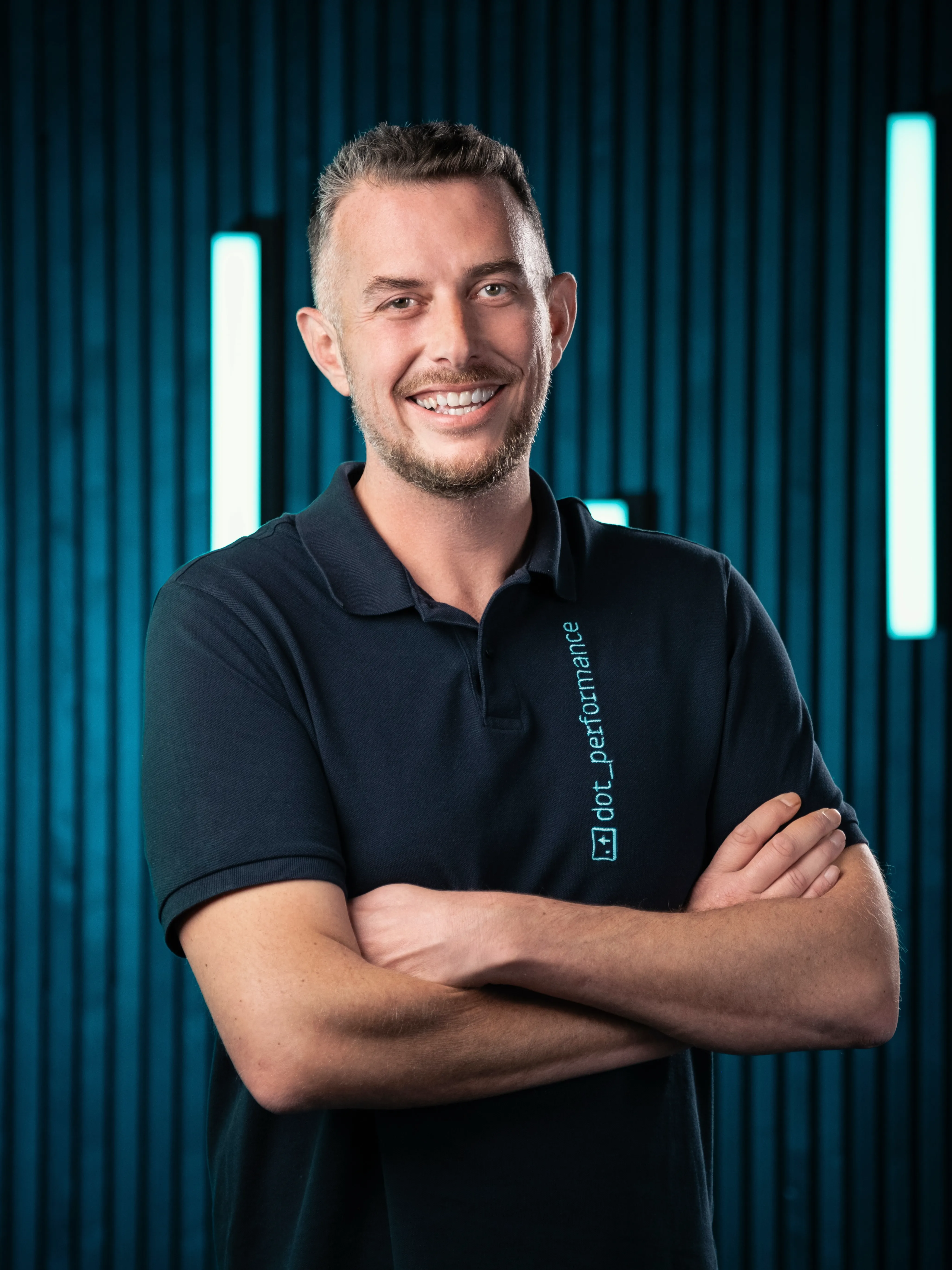
At DotPerformance, we use cameras like this when a project needs more than basic coverage.
Brand films, campaign hero content, launch pieces, product storytelling, documentary work — this is where the camera earns its keep. The benefit of 12K capture is not simply resolution. It is optionality. One shoot can produce widescreen campaign footage, vertical social crops, tighter product frames, cleaner stabilised shots, and a stronger archive of usable material for whatever comes next.
That means the production effort stays focused, but the value of the footage increases.
Final thought
Beautifully engineered tools do not always make better work.
This one does.
Not because it flatters the operator. Because it gives the team more latitude, a better image, and a cleaner route from shoot to finish. For us, that has made it one of the most useful cameras we have owned.
And still one of the most enjoyable to take on set.
Planning a campaign or brand film?
If you are planning campaign content, launch footage, or a brand film, the production approach matters as much as the idea.
We often help teams work through:
- what level of production is actually needed
- what equipment and setup are right for the job
- how to structure a shoot for reuse across channels
- how to get more value from the footage once it is captured
If you're planning a campaign, launch or brand film and want to pressure-test the production approach, get in touch.